
SYSTEMS IN ACTION · When Vendorization Creates Fragility
A real-world case study in vendorized infrastructure. When vendors capture demand but externalize failure, asymmetric incentives quietly produce fragility.


A real-world case study in vendorized infrastructure. When vendors capture demand but externalize failure, asymmetric incentives quietly produce fragility.

Michigan’s roads reveal what happens when public expertise migrates out and systems lose the capacity to correct themselves. They did not fail by accident or climate alone. They deteriorated as public expertise migrated, oversight weakened, and the system lost the ability to enforce quality.

Compressed system maps showing how incentives, signals, and structures actually move. Curated as they emerged.
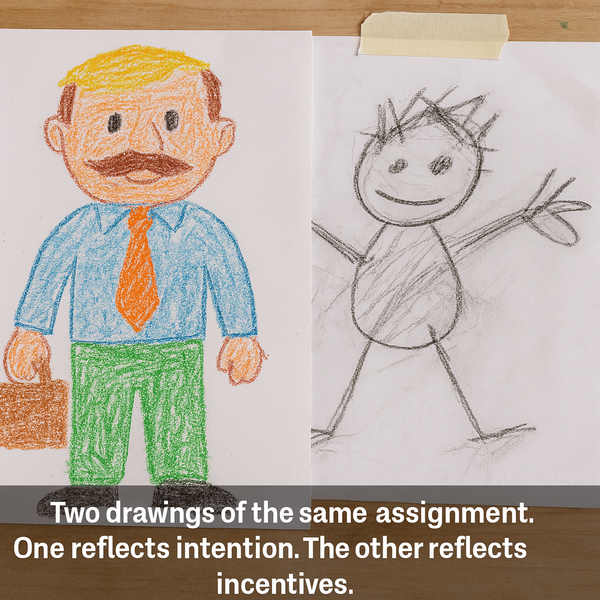
A child’s drawing revealed something most systems hide. This essay traces how misaligned incentives quietly reshape work, culture, and infrastructure—and how drift, make-work, and instability emerge not from malice, but from obedience to the wrong signals.

When traceability breaks, containment fails. This Systems-in-Action maps how well-intended safety controls quietly produce shadow supply chains and brittle failure paths—making systems harder to see, not safer to run.

Driving is one of the last places where strangers cooperate in real time. As autonomous cars rise, we risk losing the daily practice of attention, generosity, and shared responsibility that once shaped civic life.

Tennessee’s new LED speed-limit signs were meant to modernize safety. Instead, they break long-established cue structures and misalign with human perception, creating new hazards. A look at how dynamic interfaces fail when behavior and context remain static.

When Michigan’s factories left, something else moved in. This essay traces how industrial collapse, policy incentives, and institutional drift reshaped entire communities—and why incarceration became the default replacement industry in parts of the Midwest.

Children follow delight long before adults learn to override their inner compass. This essay explores how early orientation is lost through fear, incentives, and noise — and how relearning delight can restore coherence in work, identity, and life.

A straight, unflinching look at bullshit jobs: why some roles drain you, why the system needs the theater, and how to spot the risks before your skills hollow out. A human-scaled guide to value, dignity, and the first step toward real work.

Gen Z grew up fluent in emotional labor; they know what it costs to perform enthusiasm on command, and if their wage doesn’t merit it, false cheer feels like a bridge too far.

A real-world example of frame inversion. Cynthia recognized a dominance tactic, matched the pattern, and restored equilibrium in the room. A Systems-in-Action breakdown of how pattern recognition and structural fluency override intimidation.