
Capability Drift in Public Infrastructure
Michigan’s roads reveal what happens when public expertise migrates out and systems lose the capacity to correct themselves. They did not fail by accident or climate alone. They deteriorated as public expertise migrated, oversight weakened, and the system lost the ability to enforce quality.

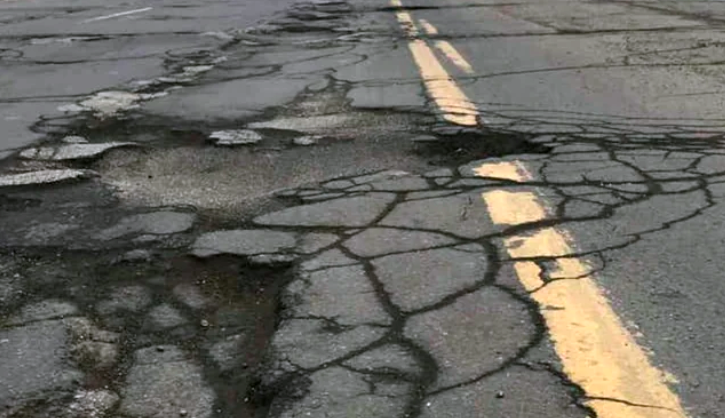
Why Potholes Took Over: How Michigan Lost the Ability to Build Durable Roads
October 2016 — the same table in London, a continuation of our conversation
On a morning in October 2016, I sat at a white-tablecloth table inside the Paddington Hilton in London, a room calibrated for serious conversation. Filmmaker and interviewer Ross Ashcroft¹ had initiated the meeting after reviewing my work in operations, supply-chain systems, and manufacturing, as well as my MIT research. He approached the discussion the way he approached all economic inquiry: by testing incentive logic across domains.
The setting matched the structure of the exchange. We were not talking about isolated failures, but about recurring patterns—how systems degrade when capability migrates, oversight thins, and accountability becomes procedural rather than substantive.
The prisons-conversation had landed; he had followed the incentive logic without resistance. After walking through prisons and industrial hollowing, Ross leaned in with the next test of the pattern, another punchy question:
“And what, oh what, happened to Michigan’s roads?”
He added, with the bluntness of someone who had seen the pattern from afar,
“Michigan roads are infamous. Even here in London, people talk and laugh about the irony of its potholes.
Why would the automotive capital of the world have such crappy roads?”
He wasn’t asking about asphalt.
He was asking about systems.
Most people blame the freeze–thaw cycles, or salt, or heavy trucks. But that wasn’t what I had seen working inside Michigan’s industrial and public interfaces.
Roads were not failing mysteriously. They were failing for the same reason factories had left: the underlying capability had migrated elsewhere.
The Hollowing-Out of Public Expertise
Over the past several decades, Michigan had steadily shifted road design, inspection, and construction oversight from public engineers to private firms bidding on fixed-price contracts.
When Michigan privatized large portions of its road construction and maintenance, something predictable happened. Many engineers—the ones who knew how to evaluate substrate depth, asphalt composition, base compaction, drainage design, and lifecycle durability—left the counties and the state for higher-paying roles inside the private construction firms bidding on the contracts.
The public sector kept the responsibility.
It lost the expertise.
The public sector retained legal accountability, but lost the technical capacity to challenge vendor claims.
The shift was quiet, but consequential. Once the internal evaluators no longer had the depth of expertise to audit the work, the procurement relationship inverted. Instead of vendors being disciplined by state oversight, the state became dependent on the vendors’ claims.
Public agencies could no longer reliably tell the difference between a properly built road and a shortcut one.
When Oversight Fails, Substitution Begins
In any system, once the accountability layer weakens, incentives do the rest.
Contractors began, according to repeated reports, substituting materials—cheaper aggregate, thinner asphalt courses, reduced base preparation—knowing inspections no longer posed a meaningful constraint.
It was classic principal–agent problem behavior:
- lower input and material costs
- same contract price
- low risk of detection
- high margin reward
A system’s quality collapses one substitution at a time.
The Physics of Premature Failure
From the driver’s perspective, the roads simply “got bad.”
But structurally, the degradation curve was predictable.
A thin asphalt layer cracks faster.
A poorly compacted base deforms under load.
Inferior aggregate absorbs water and fractures under freeze–thaw cycles.
Edges crumble when the substrate isn’t stable.
Drainage failure accelerates every weakness.
The roads weren’t breaking because of weather.
They were breaking because weather exposed the shortcuts.
Michigan didn’t forget how to build roads.
Michigan offloaded the capability to build them.

Project lifecycle, procurement and consultants
Rather than being corrected, the procurement and oversight structure that hollowed out public expertise has been normalized and remains the governing logic today.
Greg Brenner, Michigan Department of Transportation chief operations officer and chief engineer, told the Michigan House Appropriations Subcommittee on State and Local Transportation March 19, 2025 | 2025 House Legislature that MDOT oversees the planning, design, permitting, construction and closeout of major road projects across the state.
Brenner said MDOT’s standard procurement method for construction contracts is low-bid, with projects broken into pay items (for example, dollars per ton of asphalt). He described unbalanced bid reviews and itemized pay schedules that, in his account, ensure contractors meet specifications.
About half of MDOT’s work is performed by consultants, Brenner said, noting the department lacks sufficient in-house FTEs to cover peak workloads and relies on consulting firms for design and construction oversight.
Brenner’s testimony unintentionally illustrates the problem.
MDOT still “oversees” projects in name, but half the work is now performed by consultants, and procurement is structured around low-bid itemization. Oversight without in-house depth becomes a procedural check-the-box process, not substantive in the construction and maintenance of good road systems.
Neural Network mapping can show similar drift
(Layer accretion and capability hollowing; applicability to AI systems)
Rule → Stack
Stack → Vendor
Vendor → Dependency
Dependency → Fragility
In learning systems, procurement and oversight accretion mirrors uncontrolled layer and interface growth without corresponding increases in understanding or validation capacity. Adding modules, constraints, or post-hoc controls can create the appearance of sophistication while degrading interpretability, traceability, and stability.
When layers accrete faster than calibration and feedback loops evolve, failure modes migrate to the seams between components. Errors become harder to localize. Responsibility diffuses. Corrective action lags behind propagation.
In ML terms:
Depth without governance increases fragility.
Interfaces without attribution collapse trust.
Systems fail not because they are regulated, but because regulation and vendor layers accumulate faster than the system’s ability to understand itself.
A System That Could Not Correct Itself
Back to Michigan.
Once the expertise migrated out of the public sector, the feedback loop broke. Counties could no longer reliably evaluate new work, nor could they meaningfully challenge contractor explanations when failures appeared. The public lost the technical vocabulary required to demand higher standards, and each year the cost of rebuilding to proper specifications rose, as more miles of road were constructed to vendor-optimized shortcuts rather than lifecycle durability.
Predictably, substitution seemed to follow. Insiders spoke of inspection-sensitive areas (near exits and turn-arounds on highways) receiving full treatment, such as the required composites of compacted base inches, while less visible sections absorbed the cost reductions. Materials being value-engineered downward. Margins rising as accountability thinned.
No single shortcut caused collapse; quality eroded incrementally, one compromised decision at a time.
Michigan’s roads now stand as a case study in capability drift.
See systems flow diagram Capability Drift Hidden in Infrastructure.
The outcome was another version of the same pattern Ross had asked about with prisons:
collapse → capability drift → substitution → entrenchment.
In roads as in prisons, Michigan didn’t choose failure.
It chose a structure that could no longer enforce quality.
Drift did the rest.
— Madonna Demir, author of Systems & Soul
(A continuation of our extended conversation, first covered in my essay When The Factories Left)
 Madonna Demir
Have you read part 1? When the Factories Left
¹ Ross Ashcroft (1977–2024) — filmmaker, interviewer, and founder of Motherlode — approached economics through a resource-anchored lens shaped by Austrian-school analysis. He died on December 13, 2024, at age 47. When we met in 2016, he arrived prepared and intellectually focused, having reviewed my operations and supply-chain work as well as my MIT research. He vetted me for a guest segment on economic systems and supply-chain impacts and conducted the conversation with the rigor that defined his work. Minds like his do not appear often, and the world is smaller without him.