Through the Fog
Fog at work is often structural. Here’s how to keep clarity, salvage your career, and decide what to keep and what to let go.


How to keep your clarity and purpose in a workplace losing its bearings
Profit Sharing Changes the Tone of Meetings
Automotive OEMs often share profits with employees. It changes the nature of meetings and which ones survive. Under profit-sharing, nonsense meetings don’t survive long.
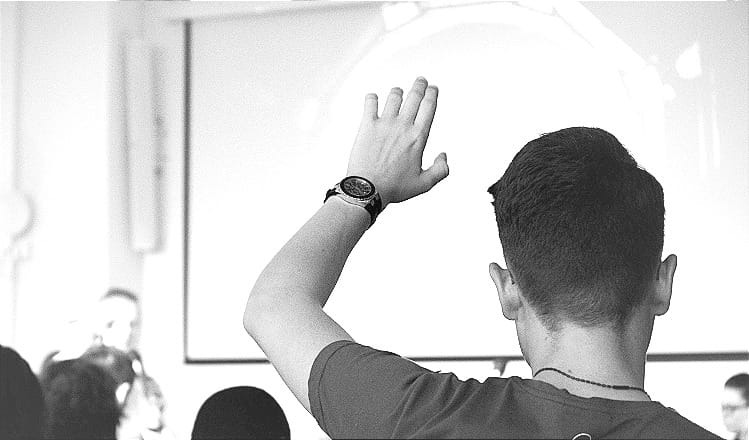
“Wait, wait,” Jim said once, holding up a hand. “We’ve burned an hour and we’re no closer. Our data’s thin in two important places, so all this chatter isn't going to get us any closer to a decision today.” He looked around the room and started counting. “If we keep going, we’ll torch another three grand just sitting here. That’s coming straight out of our profit-sharing checks. Let’s stop.”
I saw it repeat a few times, and the mechanism clicked. Profit-sharing turned excess meeting time into a number everyone could see coming out of their own pockets.
To me, profit sharing seems to promote a culture where someone can name waste without making it personal. Talking about numbers hitting each meeting member's wallets makes reality speak bluntly in a language the room can hear.
Most workplaces don’t have that, or similar-functioning things like stock and option earn-in plans, and instead run on softer currencies of alignment, visibility, stakeholder comfort, narrative safety, and the whisper lattice. Meetings abound partly because it's costly to tell the blunt truth or ask to stop the meeting.
That is where the fog starts.
The Whisper Lattice:
In the fog, you find the whisper lattice, which had emphasized the informal communication channels that stabilize teams through office chatter, no longer functions well because no one tells the blunt truth anymore.
The danger of fog
Fog is the lived experience of trying to do serious work inside an environment where feedback like Jim's is delayed, filtered, or politicized. In such environments, you can still be competent and diligent. When people stop telling the naked truth and instead have learn to give the politicized version, organizations stop getting clean signal about what matters, what moves the needle, and what’s real.
The danger of fog isn’t just that it wastes company time, although it does. If you stay long enough in an environment that rewards presentation and pomp over causality mechanisms and hard facts, you begin to recalibrate. You learn that saying “we don’t know” is riskier than being wrong. You give hard feedback such as "that idea is dogshit and here's why" less often and instead give vague, "interesting idea; let's revisit next meeting" type of responses because you've learned that foggy feedback is safe and blunt feedback is not. You trade clarity for organizational safety.
Here's the risk: over time, your own personal discernment actually drifts and becomes less capable, because we adapt to the system we are in. You yourself then become the very fog you are in. Your thinking muddles.
And then, one day, you notice the subtle injury. Your calendar is full, and your résumé has verbs like streamlined, led, delivered, achieved. And yet you know your skills have receded. The sharp knife of your inner judgment has dulled.
Questions that cut the fog
At the point where the fog settles in, the most useful move is a private set of questions that restores reality-contact. These questions keep you from spending your life standing on wooden peg-legs that cannot bear weight.
Q1: What will I be proud to tell my grandchildren?
The first question is the longest-horizon one, because fog shrinks time. It makes the next meeting feel like the only real thing. A good counterweight is to ask what you would be proud to tell your grandchildren you did, built, fixed, defended, or learned. Not because grandchildren are the point of life, but because that future-facing imagined listener has a way of dissolving your current office mythology. You can’t impress a teenager with “stakeholder alignment.” You can, sometimes, impress them with what you protected, what you repaired, the positive difference you made in others' lives, and what you made more humane in your workplace.
Q2: If I owned the company /organization, what would I immediately stop doing?
Next is the question Jim’s profit-sharing culture brought into the room: if you owned even one percent of this company, what would you stop doing tomorrow? It’s a way to borrow the owner’s clarity. Fog thrives on vague costs like the cost of speaking up (political) or the cost of volunteering (getting stuck with all the work). This question instead forces a price onto your calendar. It makes you notice which rituals exist purely because of habit and drag.
And even when you cannot stop the absurdities that set in when the fog takes over, you can still refuse to let your current situation be a total loss. In many workplaces, the most realistic move is to convert some portion of the theater into transferable skills. What are you learning that you can carry, even if the strategies change, leadership turns over, or you leave? The point is to keep your growth independent of the organization’s mood and structure.
Q3: What part of this work is real and produces tangible output?
The next question is crisp: does this work touch the real system, or only the story about the system? Some story work is legitimate, because we coordinate through narrative. However if your career life is spent entirely on narrative and stories about the work rather than the work itself, it becomes a kind of professional malnutrition. This is the question that separates a deck that guides action and immediate decision from a deck that soothes, placates, or anesthetizes anxiety. Basically, are you being asked to build a bridge, or to paint a mural of a bridge?
Q4: Who do I become if this fog continues?
Finally, the darkest question: who do you become if you keep doing this? In the small daily sense of repeated actions, we become what we habitually do. Do you become more precise, more courageous, more able to tell the truth candidly yet kindly? Or do you become evasive, performative, addicted to approval, trained to flatter bad ideas because it’s safer than naming the obvious realities?
These questions will not solve your particular workplace. They will, though, keep you from disappearing inside it. You might not be free to walk away immediately when your job disappoints you. Kids. Health insurance. Location. A spouse’s job. Aging parents. Family expectations. Debt. The simple fact of needing the paycheck, on a specific date, every month. The constraints are real.
So the practical stance is mapping out what is happening and how you can make sure your view of your career landscape and horizon doesn't vanish into the fog.
Prickly pear decisions

After the cold snap this winter, my prickly pear did something instructive. For a day or two, it looked fine. Then it began to sort itself. Some pads stayed green. Others faded toward a chalky gray-green, as the plant decided what it could afford to keep alive.
That is how staying works in fog, too. You don’t try to save every meeting, every ritual, or every corporate narrative. You keep what still has feedback, what still teaches and what touches the real world of results. And stop feeding the rest.
Staying in a foggy workplace
Staying can look like selecting one domain where you insist on reality-contact, even if everything else is theater. You make one part of your work undeniably real.
Build skills that compound
You build a skill that compounds. You price meetings privately, even if no one else will say out loud how much time has been wasted and what it just cost the organization.
Appear present but lean away from nonsense
In nonsense meetings, you learn the art of appearing present without donating your attention. A page of “notes” can be a shopping list, or a few sharp acronyms for what you’d say if the room wanted truth. GTFOHYDA
In some environments, this isn’t just a quirky tactic, it’s basic protection. When meetings are routinely litigated, union-debated, or FOIA’d, your notes stop being notes and become discoverable artifacts that can be repurposed by people who were never in the room. I saw this play out in an institution where meeting notes were sometimes treated as a resource to be extracted. Departments actually FOIA’d each other’s notes and records as strategy, as a way of gathering artifacts for later potential fights.
Once, a union leader mentioned, casually, that they might want to FOIA my notes on something routine. I handed over my bound notebook. She flipped through page after page.
“They’re no good to me,” she said. “Some sort of code?”
She handed it back.
“They’re no good to me either,” I replied, truthfully.
The notes existed for the moment of the meeting; actions got subsequently translated from meeting code to scheduled tasks or calls afterward and the rest disappeared into the fog. The acronyms dissolved into faded memory, and that was the point. No one ever requested them again.
Set boundaries
You set boundaries that don’t require anyone's permission, like declining the third pre-meeting for the project report and sending a weekly written update instead.
Leaving the fog
Leaving becomes the right move when the answers to the questions above stop being a mixed bag and start being consistently bleak. If your work never touches anything real. When you are not learning anything you can carry. Or, most of all, when the person you are becoming is someone you don’t respect. When the fog is no longer episodic weather and becomes the permanent climate.
In this case, leave without eruption. Just take what you’ve learned and go.
Until then, clarity may not be present in your current foggy workplace culture, but clarity can be a gift you give yourself in how you will survive it.
 Madonna Demir