
SYSTEMS IN ACTION · When Vendorization Creates Fragility
When vendors capture demand but externalize failure, asymmetric incentives quietly produce fragility.

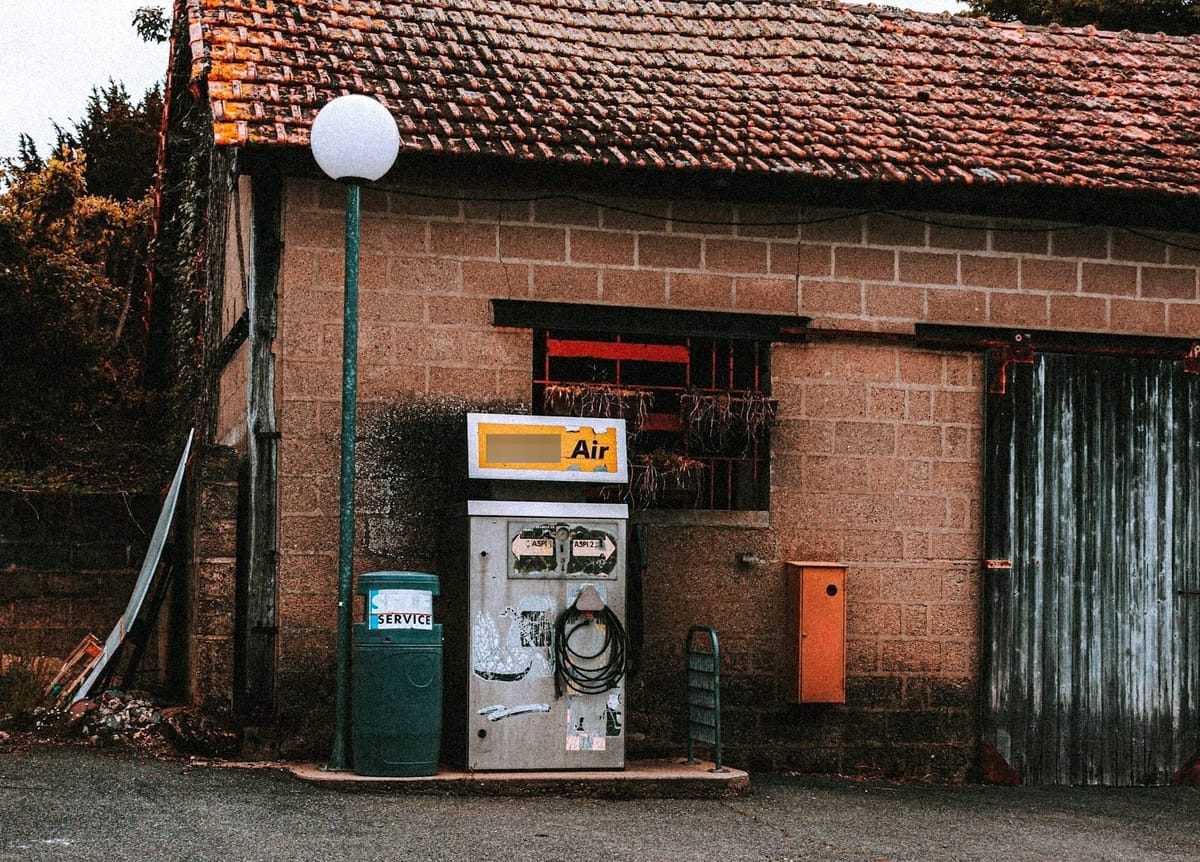
When Vendorization Creates Fragility
My vehicle flashed a dashboard warning:
—all tires low on air.
I had crossed two state lines on an interstate trip, and the temperature had dropped sharply. Cold compresses tire pressure. This wasn’t surprising, but it was not optional either. Low tire pressure is a safety issue, not a convenience one.
I decided to stop at the next exit with several gas stations.
I stopped at one station after another.
Air pumps everywhere.
None of them worked.
A Simple Need, Repeatedly Denied
I pulled up to the first tire-filling station after topping off my gas tank and immediately saw the Out of Order sign. Annoying, but not unusual. There was another station directly across the road. No air there either.
Back on the highway.
The next exit had multiple stations. I pulled straight up to the first air compressor and paid using my phone. Not cheap—$2.50 for a few minutes. The machine sounded like it was working, but the release-to-measure tire pressure function on the handle was broken. I tried filling the first tire anyway. The nozzle leaked air, but I hoped enough might still be getting in.
I walked around the side of my van and noticed a man parked extremely close beside it, so close I couldn’t have opened my door. His presence startled me. He must have pulled up while I was distracted by filling my tire, the compressor noise masking his arrival. I had planned to turn on my vehicle to check whether it still warned of low pressure in the tire I had attempted to fill. The man was leaning out of his fully opened driver-side window, gesturing for me to come closer.
“Come here,” he said. “I want to tell you a joke.”
“No joke. Move your car,” I said.
He smirked, repeated the invitation, "Come on, just a joke." I raised my voice and again told him to leave. I did not get closer. Another customer near the gas tanks looked over. The man noticed and drove away, muttering insults.
At that point, inconvenience had crossed into safety exposure—and no one in the system had an incentive to resolve it quickly
I turned the car on to check pressure, as the handle pressure gauge hadn't worked. The tire warning remained.
I tried again. Maybe if I held the filling nozzle more firmly, enough air would get in. Paid again. Same result. No meaningful increase in pressure. I gave up and began to leave. As I exited, the same black car—lights off—pulled from roadside near the exit to drive behind me, then alongside me. I turned into a well-lit station and parked close to the doors. He did not follow inside.
That station had no tire-fill area. I used the restroom to buy time and told the cashier to be alert if a strange man entered. He didn’t.
Back on the highway. Seven miles to the next exit.
Pattern Recognition
At the next exit, there were two more stations. Both had tire-fill stations. Both were out of order. One had a sign. The other simply had no power running to the unit.
By now, I had attempted air at multiple stations, across multiple brands. And that’s when something clicked.
Despite the different gas station names, the air compressors all appeared to be operated by the same third-party company. Same branding. Same equipment. Same failure modes.
At the following exit, one compressor accepted payment. The compressor never turned on. I photographed the machine to capture the 800 number for a refund and tried again using phone pay. Money debited. No air. I inserted a credit card, assuming contactless had failed. Still nothing.
I left.
At the next exit, I tried a brand I’d already visited earlier. This time, the compressor worked. Finally. But again, the same vendor branding was present.
And the structure came into focus.
The Hidden Incentive Structure
This was a long stretch of interstate highway. The vendor—let’s call them EEI—had effectively captured the entire corridor.
The pitch to gas station owners is easy to imagine:
We install the equipment.
We handle maintenance.
You get a revenue share.
Set it and forget it.
It sounds efficient. It is also dangerously asymmetric.
EEI does not need every compressor to work.
Anyone with low tire pressure does exactly what I did: they drive to the next exit. As long as some machines on the corridor function, total revenue remains intact. EEI can tolerate a significant percentage of machines being out of order at any given time without meaningful loss.
The gas stations, however, absorb the consequences.
Customers associate the failure with the station brand. Frustration, safety exposure, and dissatisfaction land there. A driver may decide that Brand X “failed them” and switch loyalty next time.
EEI, the compressor vendor’s brand, remains largely invisible. The station’s brand takes the hit.
This is asymmetric risk externalization.
Why the System Doesn’t Correct
If a tire-fill machine fails, the gas station cannot fix it.
They do not have:
- the key to the compressor lockbox
- the tools to service the unit
- the authority to reset or repair it
- the ability to issue a refund inside the store
In the past, if a coin-operated machine swallowed quarters, a cashier could refund the money. Now, payment is digital, handled by the vendor, and inaccessible to the station.
The station experiences customer dissatisfaction without having any corrective lever.
The vendor, however, experiences uninterrupted demand and revenue without immediate reputational or operational consequence.
Any safety incident occurring at the machine would be experienced by the customer at the station, while responsibility for the equipment itself remains diffuse and contested.
There is no feedback loop.
Failure is visible to the customer, not the station.
Correction by the gas station is impossible.
Accountability remains invisible to the vendor.
Fragility by Design
This is not about tire pumps.
It is about vendorized infrastructure inserted into a system where:
- demand is captive
- failure cost and brand risks are externalized
- reliability incentives are weak
- correction authority is removed from the point of use
The result is predictable fragility.
A vendor that captures revenue but does not bear failure cost has no incentive to be failure-proof. Partial reliability is sufficient. Downtime becomes tolerable. Maintenance is deferred.
The corridor remains brittle by design.
The Broader Pattern
Once you see this structure, it appears everywhere.
Hospital equipment vendors whose failures burden clinical staff.
Enterprise software tools that break workflows while billing continues.
Educational platforms embedded in classrooms without accountability for learning outcomes.
Critical SaaS dependencies with no viable local override.
In each case:
- the intermediary bears the pain
- the vendor captures the revenue
- the end user absorbs the risk
- the system lacks a return path
This is not malice. It is incentive logic. Asymmetry by design.
Vendorization fragility.
Closing
To a gas station, keeping customers safe and their needs met is core to the business. Vendorization inserts an actor into that loop who affects the brand experience but bears none of the risk.
Set-it-and-forget-it systems often forget the part where reliability matters.
When vendors capture demand but externalize failure, fragility is not an accident. It is the outcome.
Asymmetric incentive structures guarantee brittle systems.
See more field tests → Systems in Action
 Madonna Demir
If you enjoyed reading, visit my Roads Case Study: Capability Drift in Public Infrastructure