
When the Factories Left
When Michigan’s factories left, something else moved in. This essay traces how industrial collapse, policy incentives, and institutional drift reshaped entire communities—and why incarceration became the default replacement industry in parts of the Midwest.


On a morning in October 2016, I sat at a white-tablecloth table inside the Paddington Hilton in London, a room with the quiet precision of serious conversations. Filmmaker and interviewer Ross Ashcroft¹ had initiated the meeting after reviewing my work in operations, supply-chain systems, and manufacturing, as well as my MIT research, approaching the conversation with the rigor he brought to all of his economic inquiries. It turned out the setting matched the structural weight of the question he opened with.
Lunch with Ross in London
October light filtered through tall windows and made the cut crystal glow brightly. Ross had done his homework. He had reviewed my background, noted the automotive years, and opened with a question that bypassed all small talk. The abrupt seriousness of it took me a moment to register.
“I know the automotive industry took large hits it hasn’t recovered from. Tier 1 and Tier 2 supply chains moved overseas. What replaced it, particularly for Michigan, during the major footprint shift overseas in the 2000–2010 decade?”
I didn’t have a data set in front of me. No charts, no notes. I hadn’t lived in Michigan since 2009, but I had been back often. I paused, tapped my chin once, and answered the only thing that aligned with the incentives and patterns I’d watched for decades.
“Prisons,” I said. “That’s what replaced it.”
I thought I might walk it back. It was instinctive.
Instead, as I started explaining, the answer settled in with an unexpected solidity. Prisons are a business. They bring in reliable state and federal dollars. They provide low-cost labor. Around them, whole adjacent industries have grown. If you want to visit an inmate, you download an app and pay a fee. If you want to send a greeting, you pay again. If you want to put money into an account or order a care basket, there are service charges at every turn.
Michigan was not building new factories. Michigan was building prisons, expanding capacity at a rate few states matched and signing multi-state agreements to house additional populations as manufacturing employment declined. The pattern had long been visible: when a productive industry collapses in an economy that still requires employment stability, the substitute is almost never another high-skill engine. It is the lowest-complexity, non-offshorable activity with stable public funding.
Ross leaned back in his chair. He didn’t interrupt. He just watched the shape of the answer settle between us.
Later, I looked up the data to make sure I hadn’t overreached.
I hadn’t.
Adjacent Industries and the Downshift from High-Tech to Low-Tech
Back at that London table, I had felt the weight of the answer growing as I laid out the pieces. Michigan didn’t just build prisons. It built an economy around captivity. Not by conspiracy, not by intent, but by structural drift.
For every closed factory, something else opened. Not a robotics center. Not a semiconductor plant. Not an engineering hub.
Instead:
- a service contract
- a commissary vendor
- a telecom provider for inmate calls and messages
- a software company that charges families to send messages
- a payment processor that takes a cut every time a mother adds forty dollars to her son’s account
- a private operator who manages healthcare inside the facility, billing the state by the head
- a construction firm awarded repeated contracts to expand or refurbish the same buildings
These weren’t the clean-room, precision-engineering, STEM-heavy jobs that once defined Michigan. These were capture-economy jobs — work that exists only because the incarceration system exists.
Ross raised an eyebrow at one point, as if asking silently: How did an industrial powerhouse pivot to this?
It wasn’t a pivot.
It was a sink.
Economies obey gravity. When the high-vitality sectors drain away, the labor that remains pools in the lowest basin of complexity.
You cannot offshore prisoners.
You cannot outsource incarceration to Mexico.
You cannot automate a guard rotation.
You cannot digitize a prison bed.
So, while the automotive supply chain globalized, the carceral economy localized. It rooted itself in the Michigan counties that needed jobs the most. And once it rooted, the adjacent industries followed like ivy wrapping an abandoned mill.
Michigan, without saying it out loud, replaced high-tech manufacturing with low-tech containment capitalism. It swapped out skilled labor for salaried vigilance. It traded engineering innovation for procedural enforcement. It replaced exportable value with captive public revenue streams.
And the quietness of the substitution kept most people from seeing it happen. They only saw the ribbon-cuttings:
- a new facility
- a new contract
- a new administrative building
- a new vendor partnership
Everything looked like “development” on paper.
But it wasn’t development.
It was drift. Drift from a productive economy to an extractive one.
Industrial Collapse and the Constraints of Replacement
Michigan’s industrial collapse removed not just jobs, but an entire economic scaffold: supplier networks, apprenticeship pipelines, specialized labor, and county-level tax bases. When that scaffold failed, counties as well as the state required a new stabilizing structure.
The available candidates were limited:
- Tech concentration bypasses distressed rural regions.
- Healthcare expands primarily through administrative layers, not large-scale physical builds.
- Education contracts when populations shrink; post-secondary campuses in Michigan have been cutting, not expanding.
Corrections, by contrast, matched the structural requirements:
- large physical plants
- 24/7 shift labor
- stable state budgeting
- adjacency procurement
- workforce absorption without high reskilling
- zero sensitivity to global markets
- embeddedness in rural geography
Prisons did not replace manufacturing by strategic choice.
They replaced it because they were the only industry that could satisfy the system’s constraints under collapse.
This is drift functioning as design.
Later that night, scrolling through the actual data, the confirmation hit me with a dull thud. I hadn’t overstated it. If anything, my lunch answer had been gentler than the truth.
Michigan’s Incarceration Peak Lined Up with Its Industrial Collapse
During the rapid automotive footprint decline from 2000 through 2007 — the years when Tier-1 and Tier-2 suppliers were closing, consolidating, or leaving the state — Michigan’s prison population rose to its highest point in recorded history:
- 2000: 47,718 prisoners
- 2007 (peak): 51,554 prisoners
While manufacturing was shedding tens of thousands of jobs, the corrections system was absorbing bodies at a scale the state had never seen.
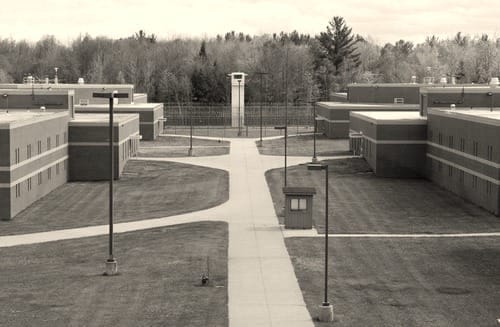
The two curves — industrial employment falling, incarcerated population rising — moved in opposite directions within the same seven-year window.
This pattern is not unique to Michigan. Rural towns across the Rust Belt, Midwest, and Appalachia have been documented as emerging “prison economies,” where corrections provides the role once held by factories: the anchor that cannot offshore.
What Michigan built after the factories left was an economy that thrives only when people fall.
A system that grows when hope shrinks.
A revenue model tied to human missteps instead of human ingenuity.
And once you see that, you can’t unsee it.
Today: A Third Fewer Prisoners, But the Same Carceral Footprint
By 2024, Michigan’s prison population had fallen to 32,778, roughly a 36% drop from the 2007 peak. The headcount went down. Yet the economic footprint stayed wide:
- corrections still consumes about 14% of the state’s General Fund
- operating the state’s 27 correctional facilities costs over $1.1 billion a year
- parole, probation, and community supervision add another $276 million
- halfway houses and residential reentry programs cost tens of millions more
In other words: fewer prisoners, but the same large, intractable corrections economy, because in many rural counties, prisons replaced factories as the stable employer of record.
The Private Layer: The “Replacement Industry”
The clearest example sits in Lake County, one of Michigan’s poorest regions. The closed North Lake facility — once a youth home, then a contracted prison for Vermont’s overflow — has now been reopened by GEO Group under a federal contract:
- Capacity: 1,700–1,800 ICE detainees
- Projected annual revenue: over $70 million
- Estimated staffing: up to 500 jobs
Factories leave. A private detention center opens. The revenue is federal. The economic fodder is bodies.
That is what replacement industry looks like in practice.
Why Prisons Filled the Vacuum
Most people misunderstand what states actually need when an industry collapses. They imagine “innovation hubs” rising from the ashes or new tech sectors springing to life. But economies don’t reinvent themselves on command. They look for the one thing they cannot function without:
Predictable employment. Not glamorous. Not upward-mobility. Just stable, year-round, budget-funded work.
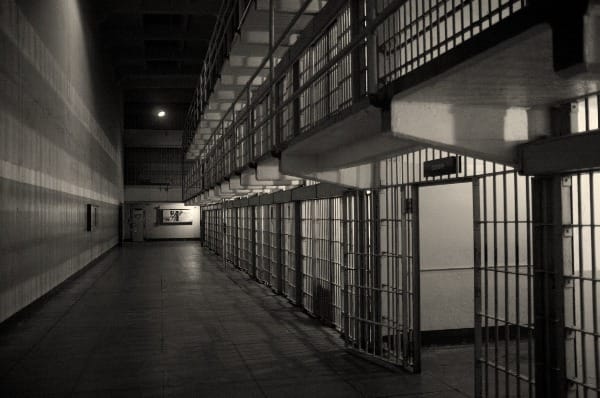
Factories once provided that. They ran three shifts, consumed huge supply chains, and kept entire towns afloat. When those factories closed, the state had to find something with similar characteristics, something that produced stable budgets, year after year, and didn’t vanish when global markets shifted.
Prisons fit the geometry.
To see why corrections substituted for manufacturing, consider the system’s requirements after industrial collapse:
- Employment that scales immediately
Corrections absorbs labor without requiring extensive retraining. - Long-term budget reliability
State and federal funding for incarceration is among the most stable categories of public expenditure. - Non-offshorability
A community cannot lose its prison to a foreign market. - Physical infrastructure
Prisons occupy large footprints and sustain adjacent industries. - Political viability
Closing a prison devastates a county; opening one appears as development. - Capacity to import demand
Michigan housed prisoners from other states (e.g., Vermont), effectively converting incarceration into export revenue through federal contracts.
Under these pressures, the system did not “choose prisons” ideologically.
It selected the only viable substitute for a lost industrial engine.
This is systems behavior, not moral intent.
The Employment Geometry
Manufacturing once provided:
- three shifts
- deep supply chains
- stable tax contributions
- regionally distributed labor needs
Corrections now provides:
- three shifts
- continuous operational demand
- steady procurement cycles
- regional labor absorption
The replacement is not equivalent in value creation, but it is equivalent in economic anchoring.
Industrial collapse left a basin of displaced labor.
Prisons settled into that basin because nothing else could settle there as quickly or as predictably.
Political Budget Reinforcement
Once prisons became major employers in distressed counties, political incentives aligned around maintaining capacity:
- Legislators avoid destabilizing a county by closing its largest employer.
- Governors avoid sudden unemployment spikes tied to facility closures.
- Budgets stabilize around corrections line-items.
- Local governments rely on procurement and staffing patterns as de facto economic development.
This creates faux stability — stability that depends on maintaining capacity, regardless of carceral need.
The drift becomes self-reinforcing.
The Broader Pattern
The Michigan case illustrates a generalizable systems rule:
When a productive sector collapses, regions replace it with whatever is non-offshorable, budget-stable, and capable of absorbing the remaining labor pool.
This is the substitution logic of distressed regional economies.
Not innovation by design.
Replacement by necessity.
The Rise of the Carceral-Adjacent Industries
Once the core facilities are built, the ecosystem grows around them:
- commissary contracts
- telecom firms charging for calls and messages
- medical service outsourcing
- construction vendors for endless upgrades
- software and payment processors
- transportation vendors
- community corrections and reentry services
- probation fee systems
- supervision technology companies
These are not side businesses. They form a new industrial vertical — one that expands even when the number of prisoners declines.
It is the same economic pattern I had described to Ross at lunch:
an entire service economy built around captivity. One in which Michigan could excel and even import prisoners from other states, such as Vermont, which sent roughly 300+ prisoners to the privately run North Lake Correctional Facility in Baldwin, MI, under contract with GEO Group.
The Political Necessity of Faux Stability
No governor wants a rural county to go insolvent.
No legislature wants a county to lose its largest employer.
No budget office wants sudden unemployment spikes.
So the system keeps the corrections apparatus funded at levels that no longer reflect prisoner counts. Not because the state wants to incarcerate more people, but because the employment structure depends on the facility remaining open.
This is not conspiracy.
It is economic inertia paired with political fear.
Call it faux stability.
Call it subsidy laundering.
Call it UBI-through-incarceration.
Either way, the political logic holds.
UBI Disguised as Work — The Structural Mirror
The pattern is identical to my earlier thesis.
In UBI Dressed Like Work, I argued that governments funnel money into jobs that exist not because the work is necessary, but because the social stability they produce is necessary.
That is exactly what I see in Michigan’s carceral economy:
taxpayer dollars →
filtered through institutions →
to maintain employment →
under the guise of “essential services.”
The work becomes the distribution mechanism, not the purpose.
The Broader Lesson for Any Region Losing Its Manufacturing Spine
Michigan isn’t unique. It is simply farther along the curve.
Any region with a collapsing industrial base faces the same substitution problem:
What do you build when your productive engine dies?
The cheap answer is: anything that brings in federal or state money.
The predictable answer is: something that cannot offshore.
The dangerous answer is: systems that grow only when people fail.
The Human and Ethical Cost
We rarely name the cost out loud.
When a prison replaces a factory, the community still gets jobs. But the moral valence flips. The local economy now depends on the continued incarceration of human beings. Families pay fees that become revenue streams. Local budgets rely on beds remaining full. County stability depends on the fragility of others.
When employment is tied to captivity, hope becomes mispriced.
Returning to the Table in London
When I look back at that lunch in London, I can still see Ross leaning back in his chair as I finished talking. Not skeptical. Not startled. Just absorbing the shape of what I had laid out. It was the moment when a casual question stopped being casual. The moment when a state’s economic story rearranged itself in the space between two people over a white tablecloth.
We both understood what had happened.
A pattern had revealed itself.
Not through ideology. Not through cynicism.
Through incentives. Through drift. Through the logic of systems under stress.
I had answered instinctively.
Later I checked the numbers.
The numbers didn’t contradict the instinct. They deepened it.
The factories left.
The prison economy grew.
The surrounding industries grew with it.
And the political scaffolding locked into place.
It was not a planned future. It was a default future.
What I felt in that moment, sitting across from Ross, was not triumph in being right. It was something closer to sad recognition. A quiet acknowledgement that the systems I had spent my life working inside had been telling this story for years. I had been seeing it for years without noticing. His question forced me to name it aloud.
What the Conversation Really Revealed
Talking with Ross clarified something larger than Michigan. It exposed the simple truth about what happens when any region loses the anchor that once held its economy steady. People imagine reinvention. They imagine innovation zones or biotech corridors. But most communities do not get those choices. They get the choices that align with:
- the lowest risk
- the most stable funding stream
- the least dependence on global markets
- the fastest path to employment for workers with dislocated skills
- and the strongest political payoff
That is what the prison economy became: a stability substitute.
A patch for a hole no one knew how to fill.
What Comes Next
Regions do not drift because they lack imagination.
They drift because incentives fill space faster than strategy does.
Michigan’s prison economy was the result of:
- manufacturing collapse
- employment vacuum
- substitution under constraint
- incentive alignment
- political risk minimization
- path dependence
The prisons grew because the factories left.
The adjacent industries grew because the prisons grew.
The budgets adjusted to preserve stability.
And drift hardened into structure.
The question now is not why it happened.
The incentives make that clear.
The question is whether Michigan will design its next employment anchor intentionally or allow the next default system to form around whatever stable funding stream appears first.
Regions reveal their future not through aspiration,
but through what they build when the old engine dies.
The Systems and Soul of It
Systems behave according to the pressures placed upon them.
People behave according to the futures they believe they can still reach.
Michigan’s story is not only a ledger of budgets and bed counts. It is a record of hopes being rechanneled into whatever form could hold them. An account of counties trying to stay alive after the old engine died. A record of how societies make tradeoffs when they do not have time or capital for reinvention.
Soul
When a place loses the work that once defined it, the loss is not only economic. It is spiritual. Factories do more than produce goods. They produce identity. They give rhythm to a town and shape to a life. When they vanish, something collapses inside the culture, long before the numbers show it.
This is the quiet truth I saw so clearly while talking with Ross.
A society always chooses what to build.
Sometimes by design.
Sometimes by drift.
But always by consequence.
And Michigan, in its long post-industrial twilight, made its choice.
It chose captivity.
Michigan never announced a new North Star after the assembly lines dimmed. It drifted instead. And drift is a kind of decision. It builds what is easiest to build. It funds what is quickest to stabilize. It accepts what hurts less in the moment, even if the cost comes later.
Prisons were not chosen with fanfare. They were chosen the way erosion chooses a riverbank. Quietly. Inevitably. One small pressure at a time.
See systems flow diagram When the Factories Left.
The question now is what comes next.
What replaces an economy built on captivity.
What gives dignity back to places that once built engines and steel.
What allows a state to become known again for creation instead of containment.
There is always another choice.
But someone has to make it.
Someone has to name it.
Someone has to decide that drift is no longer enough.
When a society loses its old engine, it must build a new one.
And the choice it makes reveals what it believes about its own future.
Michigan can choose again.
— Madonna Demir, author of Systems & Soul
(More from our extended conversation will surface in upcoming essays.)
 Madonna Demir
If you appreciated this, please read part 2 in Capability Drift in Public Infrastructure
¹ Ross Ashcroft (1977–2024) — filmmaker, interviewer, and founder of Motherlode — approached economics through a resource-anchored lens shaped by Austrian-school analysis. He died on December 13, 2024, at age 47. When we met in 2016, he arrived prepared and intellectually focused, having reviewed my operations and supply-chain work as well as my MIT research. He vetted me for a guest segment on economic systems and supply chain impacts and conducted the conversation with the rigor that defined his economic inquiries. Minds like his do not appear often, and the world is smaller without him.