Cult of the Special
The Cult of the Special begins when "specialness" status is granted before any comparison. It flatters, protects ego, blocks root cause analysis, and turns recurring patterns into sacred exceptions.


Martha's Story
“The data says this treatment has a 96 percent success rate,” her doctor said.
Martha nodded in understanding. She also knew with complete conviction, as she drove home, that her daily dandelion tea would solve her illness. A woman online had explained it beautifully. "The body wants to heal itself. Doctors do not understand everything. Statistics are for populations." Martha knew she was not a population, she was perfectly unique in a way that nature understood.
Or so she thought.
Martha was a believer in what I call the Cult of the Special.
I use the word cult deliberately. I tried softer names such as exception bias, uniqueness error or the anomaly trap. Each sounded too clean or engineering-adjacent. None of the other terms I tried on for size carried the faint alarm bell I wanted, because this belief in "special" is not merely a cognitive slip. The more I thought about it, the more ways the belief truly resembles a cult. It has doctrine, rituals, little priests-of-uniqueness and handlers. It flatters believers and protects itself from evidence with a sturdy shield. It can spread from one corner of judgment to another, innoculating a whole way of thinking and anesthetizing curiosity until a person, or a department, or an entire institution has learned to treat every inconvenient situation as a sacred exception called "Just this once."
The central article of faith in the Cult of the Special is simple: this case is different.
Substitute any word for the word case, and it holds: This illness is different. This customer is different. This market is different. This failure is different. This missing item is different. This procurement emergency is different. This investment opportunity is different. This relationship is different. This request from a powerful person is different. This risk is different, like Martha thought.
We know that situational differences can be real, and every human being is unique. Each organization has its own history, and every market has local nuances. A good physician, engineer, auditor, investigator, or operator pays attention to differences. Real exceptions do exist, and of course some situations do deserve a special path.
The danger begins when specialness is granted before any real comparison.
The Cult of the Special does not say, “This appears unusual, so let’s understand what category it belongs in and whether a similar situation can happen again (for planning).” It says, “This is unusual, so ordinary comparison no longer applies.” That is the shift, and once it happens, all further inquiry suffocates.
Root Cause Analysis
Root cause analysis starts with a signal in a system. Something happened. Methods like the 8D, an Eight Discipline Problem-Solving method taught by many Six Sigma courses, proceed next in setting up an investigative team, containment actions, root cause determination and corrective and preventive action determination and implementation.
At the start, an occurence of something unexpected happening is pure signal: A passenger pattern appeared where none was expected. A drug went missing. A supplier emergency repeated. A capital request arrived with pressure behind it. A patient faced a hard treatment choice. The signal should create curiosity. What caused it? Where else does it occur? How often has it happened? What pathway allowed it?
Who benefits if we fail to compare?
Wave Interference
Sometimes, though, rather than investigation so sounds steps of action can be planned, the Cult of the Special sends an answering wave.
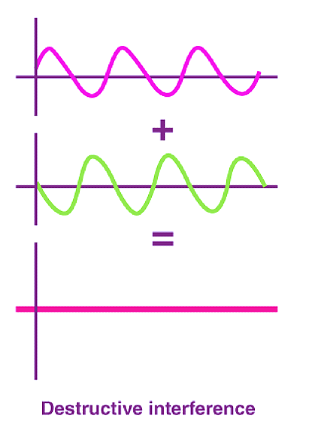
The interference wave, like the green wave shown in the picture above, gives equal weight to a different signal: It was weird so it has no relevance. It was a one-off. It will never happen again. You have to understand the circumstances. I am not like other patients. I am not like other girls. I am not like other investors. We are not like other organizations. Regulations do not apply to this special case.
The two waves meet, and signal cancels. Raw curiosity, the fuel for further investigation, falls to zero.
The Danger of Averting Analysis
That is why the belief is so dangerous. It does not need to erase the event, it only needs to persuade people that the event is exempt from any analysis.
We have watched this happen around money. Madoff became known for producing returns far outside market norms. Folks wrote it off as his being "special" before inquiry later resulted in identification of a Ponzi scheme.
Years ago, I was working with a market that produced behavior other people considered too strange to explain. Overflow demand appeared, but not as one clean category. It came from different causes, at different times, under dissimilar conditions. Each was deemed special, a one-off, so the prevailing corporate response was a shrug in professional clothing. It was "weird," or "just a fluke" or "one of those things" impossible to account for.
I did not immediately believe the demand overflows were mystical or that the market had floated outside the laws of normal human behavior, so I started sorting. What kind of overflow was this? What created it? Could the data on these overflow events be segmented? Could buried signal be separated from the noise surrounding it?
Turned out that it could, and I found a way to gain an extra billion plus dollars of revenue with the same, usual customer base, just by better understanding and pattern recognition of common elements in the anomaly set.
The result was large enough that the next institutional problem was whether people wanted to admit it existed. If the revenue was real, then something had been sitting in plain sight. "You make us look like we've left money on the table for years," one executive said (yeah, well, if the shoe fits...).
It is a peculiar thing, watching success get treated like contraband. Failure is hidden to avoid blame. Success can also be hidden to avoid learning and save a few egos.
The easiest way to hide it was to call it special. Blend it into aggregate reporting. Mix the market with others that had not used the new method. Let the gain dissolve into an average, cover for some losses, and make "the strange thing" too muddy to study. That's exactly what the organization did, and this is one of the Cult’s smaller uses. Protecting ego.
If a result is a fluke, nobody missed anything and no mistakes were made, prior opportunities were not lost. If overflows actually did have a pattern, then somebody certainly did miss something or a lot of somethings. Missed opportunities, for sure. Hiding in plain sight.
Base rates matter.
Reference classes matter.
But a strange data point is not automatically noise.
The Cult of the Special begins when people grant exception status before comparison, then use that exemption to stop learning.
All of this is why the Cult of the Special is not confined to foolish people. Smart people use it too, sometimes even more elegantly because even more ego is at stake. They use it when a category would be embarrassing or when recognizing a pattern would create more obligations. They also use it when a new result would force a question about old judgment. They use it, too, when learning would be expensive socially, so ignoring a possibility for improvement and writing it off as "too special" buys them friends or political capital.
I have watched the same belief preserve waste. A department has an emergency, so a supplier must be found quickly. The price is terrible, but the story is persuasive. There was no choice. The request was unusual. Timing was bad. The need was urgent, therefore price was the least of the problems. And then, predictably, everyone moves on.
Until, of course, another emergency arrives, dressed in slightly different clothes. A different requester asking for a different item with a completely different explanation. Again, no choice, unusual, and very, very urgent. No time to look for an ideal supplier or price, just accept the suggested one and move on.
Nobody asks how often this kind of emergency occurs or whether seasonality is involved. Nobody asks whether three suppliers could have been prequalified in advance, with negotiated terms, so the next emergency would cost 40 or 60 or 75 percent less. The organization doesn't build the contract because the category anticipating such urgency never forms. Each event is kept alone, like an orphan. The Cult of the Special has won.
Inquiry is humbling. Curiosity compels finding other data which might say, here are the other cases or here is the population to study, the similar data set. Here is the recurrence. Here is what happened to people, patients, riders, departments, markets, or victims who looked more like you or this situation than you may want to admit.
The Cult of the Special makes every warning feel crude and unnecessary, insulting in a way that doesn't understand the special-ness of this situation. Every pattern feels irrelevant.
This is how people get hurt.
Risks and Root Causes
The motorcyclist without a helmet does not believe head injuries are imaginary. He just believes they happen to other people. A patient who abandons tested treatment for internet folklore may not reject medicine in the abstract, she simply declares herself more in tune with nature or outside the population of normal people who eat more junk food, to whom the survival rate data applies. The investor who wires money into a too-perfect opportunity does not believe fraud doesn't exist. He just believes this particular door was opened for him because he is unusually perceptive, trusted, smart or fortunate.
A former federal investigator once described reviewing offender interviews and noticing a pattern in how predators persuaded victims. The language often turned on specialness. You are not like other girls. You are not like other guys. You are more mature. You understand me or us. What applies to them does not apply to you.
From a distance, we can clearly see this is not romance but pure grooming by preaching the Cult of the Special.
The victim is invited to step outside any ordinary comparison. This preaching of "specialness" relieves a tension many children feel, wondering if they are good enough. By feeding this normal need for assurance with a persuasive answer from a so-called trusted adult, parents’ concerns become irrelevant, friends’ warnings get labeled as jealousy, and the age gaps which should signal danger instead become proof of sophistication. Next, secrecy becomes intimacy and boundary violations become signs of trust. The target has not merely been deceived about the predator but has been persuaded to distrust any prior examples anywhere.
A similar mechanism appears at the other end of life, too. Imagine a 70-year-old widow courted by a 30-year-old man who wants access to her wealth. He will not say, “I am here to drain your accounts.” He will say, “I don’t normally go for women your age, but you are different.” To an outsider, the line gives off red flags and signal. We see the trick because we are not inside the flattery. “Special” is being used once again to suspend judgment.
The same architecture appears in institutions, although the language is less intimate.
A senior person asks for something improper. He does not begin by stating it as a crime. Instead, he begins with an explanation of how special this one-time exception is. The board is difficult right now. The normal process does not fit. We have to be practical. I have been here thirty years and have never seen a situation like this. It truly is a once-in-a-lifetime occurence. One-time events require special remedies.
That phrase should be mounted in a small frame and placed in every audit department as a warning, "Watch and ask about The Urgent Situation."
Special situations may certainly need careful remedies such as more controls, more traceability, clearer authority, better records, or more explicit approval paths. Watch the Cult use novelty in the opposite direction, though. The Cult of the Special treats novelty as permission to loosen the system with fewer controls and more leniency.
In one case, I saw a large capital request being nudged toward a category where it did not belong, a category with looser regulatory lines. The pressure to reroute it came wrapped in experience. Decades in the institution. Never seen anything like this. The ordinary route was inconvenient and completely unnecessary, because the situation was so very special.
Fortunately, the category already had a traceable anchor. Legal had already issued a formal memo defining categorization at my request, because I had seen the forming clouds of the gathering storm. The memo was categorized, tracked, indexed, and part of the publicly discoverable institutional record. Thus it did not live in someone’s recollection or care who was asking.
That mattered, because the request dissipated once I produced the memo.
The answer did not require accusation, pushback to a superior or a sermon from me on what was right or proper. It was mechanical in that the classification was clear along with its corresponding regulatory environment.
Traceability Can Avert the Cult of the Special
Traceability is almost always an antidote to the Cult of the Special because it preserves comparison across time.
Without traceability, every request can be born again as innocent in nature. The organization never asks what happened last time, what legal said, what category applies, what authority is required, or what record will survive the meeting. It just asks, "Wow, this is special. Unheard of. What should we do?" and often looks to the most senior or influential person in the room.
The Cult thrives in oral culture, hallway-talk pressure, fragmented records, local memory, chain of custody gaps, undocumented handoffs, and charismatic authority. It thrives when someone can say, “Trust me,” and the system has no better answer so it shrugs and says, "Okay, guess so, will do."
A traceable system, though, replies, “Compared to what?”
That question is small enough to seem almost impolite. It is also one of the most powerful questions in system governance.
Sometimes raw curiosity is enough, just the willingness to gather the comparison set without listening to explanation first or buying into a story that makes the room comfortable.
Curiosity says, "Hmm, let me gather all urgent purchases for the last five years."
That simple act may reveal a pattern of category, timing, requester, supplier, or seasonality. It may show that certain suppliers perform poorly against their comparison set, yet keep appearing through emergency channels where price and quality scrutiny weaken. It may show that the emergency is not an emergency at all, but a procurement pathway wearing a siren.
How many things have gone missing precisely in the gaps between chains of custody? The question does not deny that the case may be unusual. It simply refuses to grant exemption before the evidence is in.
Safety and Chains of Custody
In safety work, that refusal matters.
A controlled substance disappears. The Cult wants to treat the disappearance as an odd event. Strange, unfortunate, possibly unknowable. Maybe no one can prove exactly what happened. Maybe no one looks at the pattern of recurrence. Maybe no one can prove a drug ring. The event becomes fog, and institutional memory fades.
A systems thinker looks past the event to the pathway.
How could this happen? Who knew the item was coming? Any gap in the chain of custody? Where did custody transfer? Could it sit unattended? Could a handoff disappear into local memory? Was the path under camera coverage? Was the final recipient verified? Could the same gap be used again?
Proof of the exact past act is not always necessary to justify closing a vulnerability. Aviation does not need ten crashes before studying a failure path. Quality systems do not need ten catastrophic escapes before strengthening a control. Medicine does not need ten identical deaths before recognizing a contraindication. A pathway can be enough.
The Cult of the Special asks, “Can you prove this exact scenario will happen again? No, so let's just write it off and forget it."
Systems thinking asks, “Why was it possible in the first place?”
That distinction saves lives.
It also irritates people. Preventive work often does. Prevention creates inconvenience before another visible disaster, so it imposes friction on people who may have benefited from ambiguity, or merely grown comfortable inside it. A locked box, a camera path, a signature requirement, a qualified supplier, a legal memo, an audit trail, a market-level report, a chain-of-custody log: each one is a small insult to the Cult. Each one says the event belongs to a category. Each one makes it harder to claim the next incident arrived from nowhere.
This is why handlers dislike clean systems.
Handlers and Prophets in the Cult of the Special
The Handler is the Cult’s useful functionary. Not always corrupt or conscious of wrong-doing, sometimes handlers are merely socially gifted and allergic to accountability or like collecting political capital chits. The handler’s job is to make inquiry feel unnecessary, rude, disloyal, naïve, or out of touch.
Like more traditional cults, the Cult of the Special also has prophets. They may have outsized personalities, formal authority, political weight, charm, romance, institutional seniority, or simply the confidence to make other people doubt their own alarms. Sometimes the prophet and the handler are the same person. Sometimes one preaches the exception and the other protects it after the fact.
Watch for the person who insists, before comparison, that this case is different.
Watch also for the aftereffect. Once someone accepts exemption in one domain, exemption becomes easier to accept in another. A person who has learned to distrust comparison around medicine may distrust it around money. A department that accepts one unexamined emergency may accept the next. An institution that lets one powerful person define an exception may soon find itself governed by exceptions.
A police chief says, “We have never had anything missing from this particular room before. Plus, no witnesses to interview.”
A curious institution may hear the beginning of a no-holds-barred cross-functional investigation, while a handled institution hears the end of one.
The handler adds the atmosphere. "Yes, exactly. It fits in no one’s hands. The supply chain is clean. The licensed recipients are clean. I guess it is just one of those things." Their shrug is the signal to end all modes of inquiry, just one of those things is a lullaby for systems failure.
It sounds like wisdom because it has the weary cadence of experience. But it contains no cause, no mechanism, no category, no prevention. It is the kind of sentence that lets an organization feel mature while it refuses to think.
Most organizations do not suffer from a lack of signals. The signals are often lying around in plain sight. The cost overrun. The repeated emergency. The missing item. The odd passenger flow. The strange request. The complaint no one classified. The relationship pattern everyone can see except the person inside it.
The problem is not always data absence, often the problem is signal-canceling belief. The Cult of the Special is one of the most efficient signal-canceling beliefs humans have invented.
It comforts the patient, protects the executive, flatters the victim, shields the handler, excuses the analyst, enriches the supplier, and preserves the organization’s preferred story about itself. It can hide failure. It can hide success. It can hide danger. It can hide opportunity.
It is especially seductive because it borrows from a truth. You are, in some deep sense, unrepeatable. Your life is not reducible to a spreadsheet. Your organization is not identical to another. Your market has texture. Your body has particulars.
Your story matters, but dignity is not exemption, and particularity does not repeal probability.
Local folklore does not erase recurrence. The story will be forgotten when the same or similar thing happens again.
The Seduction of Uniqueness
A human being can be unique in the eyes of God and still be subject to the same ordinary realities that have harmed other human beings for centuries.
The Cult of the Special blurs that line. It whispers that being distinct means being exempt. It converts dignity into vanity, novelty into permission, uncertainty into avoidance, and complexity into a reason not to learn.
A healthier doctrine would begin with a sterner mercy.
Assume the pattern may apply.
Then test.
If the case is truly different, comparison will not destroy it. Evidence will refine it. The exception will become clearer because the surrounding population has been understood. Real exceptions do not need the room darkened. False ones do.
Systems Engineering Lessons
This doctrine belongs near the center of any serious systems practice because it explains why so much intelligence fails to become learning. People observe the event and lose the category. They see the anomaly and refuse the population. They encounter the strange thing and treat strangeness as a stopping point.
But strangeness or uniqueness should not be the end of inquiry.
It is an invitation.
— Madonna Demir, founder of Convivial Systems Theory and author of Systems & Soul
 Madonna Demir