
The Demon Denominator
False efficiency begins when systems measure the wrong unit. The Demon Denominator explains how cost savings, make-work, and design failures hide inside bad denominators.

Coffee at the drive-through
The barista handed my cup out the window. As I grabbed it, the cup deformed in my hand and its plastic top began to dislodge. “Oh, I forgot. I need two cups.”
“Easily done. Just ask for two. Everyone does now.”

The coffee place had optimized and optimized, removing costs until their cups had become so thin that I had spilled hot coffee on myself twice. My mind came up with the same solution that apparently everyone else’s did too: just double-cup it.
Similarly, at the grocery store, I had been double-bagging for a while, just so groceries could make it from the car to the house without bags bursting.
Pointy-penciled analysts had likely received bonuses on their cost savings, measured purely on a per-cup or per-bag basis.
Wrong denominator.
The correct denominator should be cup cost per coffee order. Or bag cost per grocery trip.
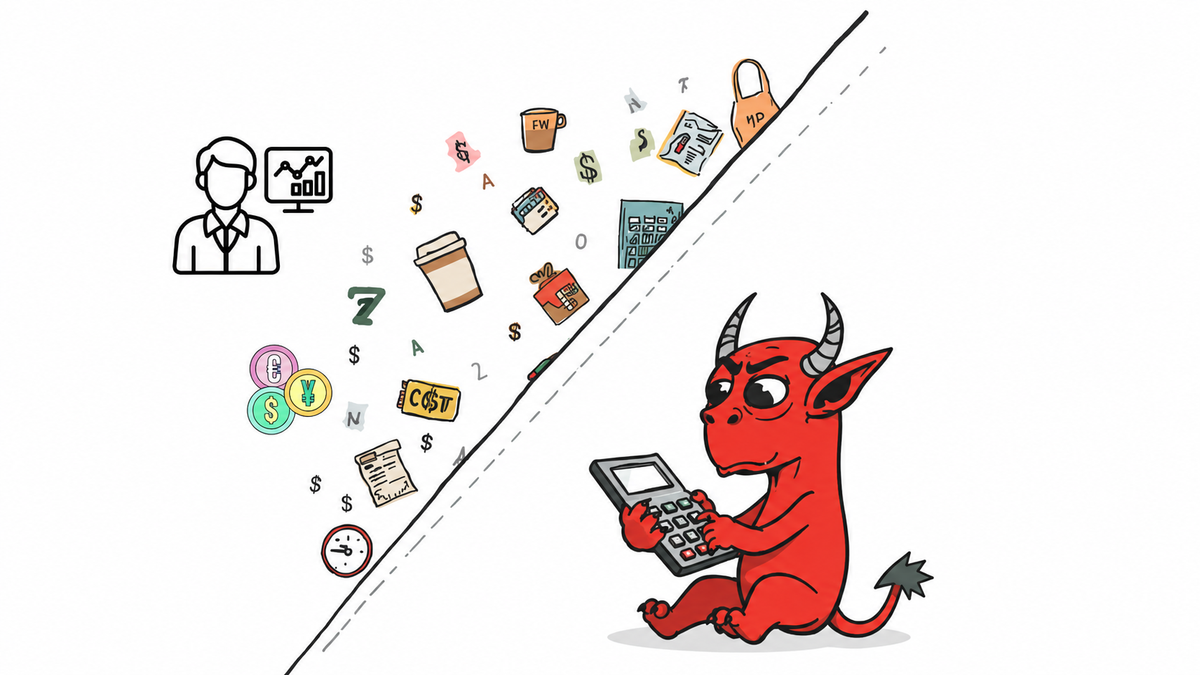
I call this mistaken cost-basis in financial analysis the problem of the Demon Denominator.
The Demon Denominator
The Demon Denominator shows up everywhere once you see it.
The task was never “hold one cup” or “use one bag.” The task was to receive and to drink a hot coffee safely. The task was to carry groceries home and place them onto the counter with bag intact. When the denominator shrinks to measure something below the real task, the system can appear to "save money" while creating more waste, more handling, more irritation, more risk, and more downstream correction, often at a larger total task cost.
The Demon Denominator does not eliminate cost. It relocates cost outside the measurement frame.
Ketchup Dream
I had a dream about ketchup. Simple ketchup.
I had ordered hamburgers and fries to go, and had found that I needed nine ketchup packets in total. Nine.
Later that night, in a dream, I imagined pitching a fast-food CEO on how to demonstrate the difference between his superior chain and the other competitors, with ketchup as the differentiator of the customer experience.
In the demonstration for an ad campaign, he poured each hamburger joint’s ketchup packet onto a wooden cutting board. Small red dot, small red dot, small red dot, each with their chain’s logo nearby. Then he poured his chain’s ketchup. One packet. Large red tomato mass. He turned the cutting board slightly and allowed his chain's ketchup to drip over his own logo. The other small blobs of ketchup remained intact, as they were too small to muddle down the board toward theirs.

Here was the Demon Denominator again. And the CEO in my dream had turned it to his advantage. Everyone had optimized for a smaller and smaller packet basis. He went large, instead aiming for customer satisfaction and a seamless experience.
Yes, sure. The cost saved on a per-packet basis likely justified smaller and smaller packets, on paper at least, to a financial analyst far removed from reality. But when measured on a per-visit, total meal basis, the cost of packaging may have outweighed the cost of tomatoes, vinegar, sugar, and salt. The waste was also far worse with smaller packets. With larger packets, if more ketchup was served in a single portion than was needed, the excess tomato mixture could dissolve, decompose, or wash away. The additional required packets (nine total in my example), however, little laminate envelopes of plastic and foil, would live far longer than the meal, the restaurant visit, the accounting period, and likely even longer than the analyst who approved it, taking up space in a landfill somewhere.
The Soccer Game
Consider a public school soccer game. A parent or grandparent tries to pay two dollars in cash at the gate. The school will not accept cash. The person is told to download an app. Admission, once two dollars, becomes five: two dollars to the school and three dollars to the technology company that inserted itself between the public institution and the community member trying to watch a child play soccer.
From one institutional angle, the denominator may have looked tidy. Digital ticketing reduces cash handling. It creates clean records and may make reconciliation easier. It may reduce volunteer burden at the gate. All of that can be true. But the denominator was not supposed to be “cash-handling minutes saved per event” or “ticketing records captured per attendee.” The human task was simple access to a public school event without an additional fifteen minute download burden, additional cost, and data vulnerability simply to attend.
Once that task fails to be remembered, the arrangement looks different. A public school gate becomes a private toll surface in service of a technology platform. The family has been turned into a payment endpoint. The tech company now takes in more per person than the school does. The community ritual, already modest, acquires a data trail, a fee layer, and an app requirement.
The Demon Denominator likes such arrangements because the harm is distributed. The school may see administrative convenience. The vendor sees scalable revenue. The district sees modernization.
In contrast, though, each family sees a small, persistant insult, too minor to organize around and yet too irritating to ignore. The old denominator was admission to a school game. The new denominator is platform-mediated transaction completion. The child still plays soccer, but something in the civic field has collapsed.
This is how public institutions get captured. Rarely all at once. Usually at the gate.
The Fuel Tank
Years ago, I was in a discussion about how to get a particular vehicle to show better gas mileage in consumer reports and vehicle sticker printouts.
One bright idea surfaced quickly: make the fuel tank smaller.
A smaller tank would reduce vehicle weight. Reduced weight would improve fuel economy. On paper, the vehicle would perform better against the chosen metric. The spreadsheet would show the improvement. The target might even be met.
The customer, however, would simply stop for gas more often.
Here, again, the denominator was doing the damage. The system was measuring miles per gallon in a way that rewarded a narrower component-level gain while ignoring the completed human task, taking a trip with their family.
People do not experience a vehicle as a lab result. They experience it as an out-of-state trip, a commute, a school run, a weekend drive, a late-night fuel stop, a stretch of rural highway, a decision about whether to pull off now or keep going.
The better denominator might have been gallons per 1,000-mile trip pattern. Or stops per ordinary month. Or reliable range under real driving conditions. Something, at least, that kept the driver’s task in view in the denominator.
A fuel tank is not merely a container for gasoline. It is a buffer. It carries reserve, optionality, and peace of mind. It lets a driver pass a bad exit, avoid a dangerous station, wait for a better price, or keep moving when children are asleep in the back seat.
When the denominator is too small, buffer looks like waste.
The Demon Denominator's Tricks
That is one of the Demon Denominator’s favorite tricks. It takes the part of the system that absorbs reality, the extra cup thickness, the stronger bag, the larger ketchup packet, the adequate fuel range, and makes it appear inefficient because the metric has been drawn too tightly around the component rather than the total task system. On a component basis, cost goes down. Weight goes down. Material goes down. On a system basis, the customer’s burden goes up.
The tank gets smaller. The road gets longer. The dashboard calls it progress.
This is how false efficiency gets built. A system chooses a denominator that is technically measurable, financially legible, politically defensible, and bonus-rewardable, then treats it as though it represents the real work being done. The smaller analyst-defined denominator feels precise. Cost per cup. Plastic per bag. Sauce per packet. Miles per gallon. Revenue per ticket (not event). Labor participation rate. Replies per day. The number looks disciplined. The dashboard looks serious, and the savings look clean.
Then the real world answers back. The company wonders where the supposed savings went.
The customer takes two cups. The bagger doubles the bag. The family opens nine ketchup packets each. The driver stops for fuel more often. The parent pays a tech company more than the school. The user swats away prompts, alerts, interruptions, and “helpful” nudges that were optimized against some metric other than the experience of completing the task.
The Demon Denominator is a denominator that has lost contact with the completed human act.
It is a small thing with large consequences because most institutional failure does not begin as villainy. It begins as a measurement convenience that hardens into managerial truth. Once a denominator becomes authoritative, the surrounding system learns to serve it. People stop asking whether the measured unit corresponds to the lived task. They ask whether the measured unit improved.
Workarounds abound
The grocery bag got thinner. The bag budget forecast improved. The customer doubled the bag.
The cup got cheaper. The cup budget forecast improved. The customer doubled the cup.
The ketchup packet got smaller. The per-packet budget forecast improved. The customer opened nine.
Each local optimization seemed reasonable inside its own accounting frame. Each became absurd at the level of use.
The Human Cost of the Demon Denominator
This is why the Demon Denominator is not merely a consumer annoyance. It is instead diagnostic. It exposes a system that has confused a component with a task, a metric with an outcome, a cost center with real life.
The fuel-tank example is especially revealing because it hides inside a metric Americans already revere: miles per gallon. A car can improve its fuel efficiency while reducing the tank size enough that the lived experience of distance barely improves. On paper, the car goes farther per gallon. On the road, the family still has to stop. The denominator, miles per gallon, is not meaningless. It tells us something real. But the completed task is often not “extract maximum distance from one gallon.” The completed task is “make this trip possible with tolerable interruption, reasonable anxiety, and enough reserve capacity to handle weather, traffic, children, detours, and late-night exits where the only station closed twenty minutes ago.”
A system organized only around miles per gallon may miss the more human denominator: miles per refueling cycle under normal use. Or refueling interruptions per trip. Or range reliability under real conditions. A tank is not just a container. It is a buffer. It holds optionality. It absorbs uncertainty. It lets a driver pass the bad station, the unsafe exit, the overpriced turnpike plaza, the stretch of road where everyone else also needs fuel at the same time.
When the denominator narrows, the buffer looks like waste.
That may be the heart of the Demon Denominator. It often mistakes resilience for inefficiency. Extra cup thickness, stronger bags, larger ketchup packets, adequate fuel range, human-scale ticketing, spare capacity, local judgment, recoverable paths, and the ordinary slack that makes life workable can all look excessive when the denominator is too small. Shave the cup. Thin the bag. Shrink the packet. Reduce the tank. Remove the cashier. Automate the interaction. Centralize the gate. Push the user into the app. Route the burden downstream and call the upstream savings real.
The Demon Denominator and Public Policy
The Demon Denominator is not always about money. Sometimes it is about attention, compliance, labor, or political optics.
The same structure appears in labor policy, though the moral language is different. People need purpose, competence, rhythm, and contribution. That is true. A job often provides more than income. It provides social contact, responsibility, identity, timing, fatigue that feels earned, and a way to be needed without having to narrate one’s need. A society that ignores this will make bad policy.
I have seen Local Content Requirements, LCRs, create triple work. Global production sent finished goods around the world, except for one country that imposed LCRs on that category of goods. That country’s allotment was shipped first to Eastern Europe for disassembly and kitting. The newly containerized parts were then shipped to the destination country, where adults in a factory spent their days reassembling goods that had already been built, unbuilt, and rebuilt again. Triple the work. No single worker necessarily knowing the whole story.
The official denominator may have been local jobs created, domestic assembly achieved, or local-content percentage satisfied. The lived denominator was human life spent undoing and redoing completed work so the transaction could pass through a politically acceptable gate. The measured output was local content. The politician of the destination country could brag about job creation. The actual output was choreographed redundancy.
Useful Work vs. Make-Work
Useful work and make-work are not the same thing. Civic maintenance repairs something real. Parks, trails, drainage, libraries, elder support, cleanup, repair, beautification, tutoring, maintenance of public records, emergency preparedness, and local food systems can all absorb human energy in ways that strengthen the community. Work can be a form of belonging.
Make-work preserves the moral theater around job creation at a cost of real necessary contribution to the public good.
Here the Demon Denominator often enters through political acceptability. A direct transfer is too visible. People may object to someone receiving money without visible labor. So the transfer is routed through local-content rules, procurement preferences, compliance bureaucracy, subsidized positions, grant conditions, vendor structures, and activities that can be described as productive because activity occurred. The denominator becomes jobs created, hours logged, participation achieved, dollars routed locally, forms completed, or payroll supported.
The correct denominator should be closer to community repair per public subsidy dollar.
A beautification project can be real. A road dug up and repaved for no defensible reason is churn. A worker stationed in a system for safety redundancy may preserve competence and response capacity. A worker preserved in a role after the core task has disappeared may be a paid slot dressed as public purpose. The distinction is not anti-work. It is pro-work, if work is understood as contact with reality rather than motion inside an administrative frame.
This matters because societies under automation pressure will be tempted by hidden transfers. UBI may not arrive as UBI. It may hide in subsidy shadows, routed through procurement, compliance, local-content rules, make-work, preferred intermediaries, and public-private funding structures. The transfer logic still happens. It simply arrives wrapped in repetitive, sometimes redundant activity that can be called productive, but is it really?
The Demon Denominator asks a blunt question: productive of what? toward what net public good?
Systems Engineering of the Demon Denominator
A system can produce payroll and weaken competence. It can produce job participation and waste human life. It can produce procurement activity and starve the actual community. It can produce compliance and bury the truth. It can produce impressive savings dashboards while the groceries fall through the bag on the way to the front door.
This is where the doctrine becomes larger than cost analysis. The denominator is a moral instrument. It decides what counts, who counts, what burden is visible, and where the system is allowed to declare victory.
In software and AI systems, the Demon Denominator can be especially slippery because the measured units are so easy to instrument. Clicks, sessions, completions, retention, response time, prompts handled, interventions delivered, safety checks triggered, messages sent, notifications opened, friction reduced. All of these can be useful. All can also become demonic if they detach from the completed human task.
A writing assistant that interrupts quickly may score well on responsiveness while degrading thought formation. A safety system that inserts supervisory language into every exchange may reduce liability signals while alienating high-agency users. A platform that optimizes for engagement may learn that outrage, novelty decay, and fear produce more measurable activity than comprehension, trust, or civic sensemaking. A product team may celebrate reduced handling time while customers spend longer recovering from the interaction elsewhere. A vendor identification layer may be added rather than internal model competence improvements.
The denominator is not “did the system respond?” The denominator is whether the person completed the task with less waste, less confusion, less unnecessary submission, and a clear return path if the system failed.
Demon Denominators Reveal A Lost Sense of Reality
This is why Demon Denominators are so common in organizations that have lost contact with use. Leadership sees the metric. Operators see the workaround. Customers feel the insult. The analyst sees the on-paper improvement. The frontline worker hears, “Everyone asks for two cups now.”
That line from the barista was not a complaint, it was operational knowledge. The system had already been corrected by users, each coming to the same conclusion at scale. The official design said one cup. The lived design said two. Somewhere above the window, the spreadsheet still thought the cup had been optimized.
Workarounds are often the first evidence of a bad denominator. People double-cup, double-bag, open nine packets, screenshot records, keep paper copies, call instead of using the portal, avoid the app, learn which clerk can actually fix things, or create private rituals around public dysfunction. These behaviors are not inefficiencies created by irrational users. They are field repairs.
The field is telling the system that its denominator is wrong.
Rebuilding Healthy Systems - Convivial Systems Theory
Healthy systems listen to workarounds. Brittle systems punish them. Extractive systems monetize them. A company might notice that the cup is thinner and sell a premium insulated sleeve, which is additive to the two-cup system and not a replacement for it. A district might notice that families tolerate the app and sign a longer vendor contract. A platform might notice that users endure interruption and increase the prompt frequency. Or a bureaucracy might notice that employees complete the useless forms and add yet another attestation layer.
In each case, the workaround becomes evidence of user adaptation rather than system failure.
That is how Demon Denominators survive. They are protected by the very fact that humans are competent. We adjust. We double up. We find the path. We absorb the spill, the tear, the extra fee, the additional login, the errand, the queue, the form, the indignity. Our competence hides the design failure from the people who only watch the metric.
Demon Denominator Creates Class Blindness
This is also why Demon Denominators create class blindness. People with money, time, literacy, transportation, smartphones, credit cards, flexibility, and social confidence can often absorb the shifted cost. They can download the app, pay the fee, carry the extra bags, buy the better cup, drive farther, subscribe to the workaround, hire help, or leave the system entirely. People with less slack experience the denominator failure as exclusion.
A two-dollar soccer game that becomes five dollars through an app does not affect every family equally. A thin grocery bag is a nuisance to someone with a garage and a short walk. It is a different matter for someone carrying groceries up three flights, on a bus route, with a child in tow who forgot to ask for the extra bag. A smaller fuel tank is mild irritation for a driver surrounded by safe, open stations. It is a real constraint for someone crossing rural stretches at night. A poorly designed portal is annoying to the digitally fluent. It is a barrier to the elderly, the poor, the distracted, the grieving, the disabled, and the already overburdened.
The Demon Denominator often presents itself as efficiency while functioning as burden transfer to the least buffered person in the chain.
This is why the repair cannot simply be “measure more things.” Systems already measure too many things. The repair is to choose denominators that remain attached to the completed task.
Cost per completed task
Cup cost per safe coffee order.
Bag cost per completed grocery trip.
Condiment packaging per meal served at expected use.
Fuel range per ordinary trip pattern, including reserve.
Ticketing burden per public event attendee.
Civic work measured by actual community maintenance, not payroll motion.
AI assistance measured by completed user task and preserved agency, not number of interventions.
Procurement measured by total system value and repairability, not unit price.
Compliance measured by truth preserved and harm prevented, not forms completed.
A good denominator carries the whole task in view. It includes the return path. It notices waste created downstream. It treats human burden as part of the system, not an externality. It asks what the user, worker, customer, citizen, or community is actually trying to complete.
This sounds obvious until one remembers how much of modern life has been optimized by people far from the point of use. The analyst may never hold the cup in the car. The vendor may never stand at the school gate behind a grandmother trying to download an app. The procurement officer may never carry the bags. The policymaker may never perform the subsidized task. The product manager may never rely on the help system while tired, under pressure, and out of patience. The dashboard narrows the world to the part the institution wants to see.
Where Institutional Imagination Goes to Die
The Demon Denominator is the little fraction where institutional imagination goes to die.
There is, however, a better version of efficiency. It is less glamorous because it refuses to steal from the unmeasured part of the system. It does not ask how thin the cup can be. It asks what thickness prevents burns, spills, double-cupping, complaints, waste, and loss of trust at the lowest total burden. It does not ask how little plastic can be used in one bag. It asks what bag design gets groceries home intact with the least total material, handling, and failure. It does not ask how small a ketchup packet can become before the customer revolts. It asks how the condiment should be served so the meal works and the waste stream makes sense. It does not ask how much of a public ritual can be handed to a vendor. It asks what access should feel like when the institution still belongs to the public.
Real efficiency is not stinginess. It is elegance under full accounting.
The Demon Denominator hates full accounting because full accounting ruins the trick. The savings begin to look smaller. The waste becomes visible. The user’s irritation counts. The worker’s workaround counts. The public’s trust counts. The extra packet, second bag, duplicate cup, hidden fee, redundant job, and degraded experience all return to the ledger.
Once they return, many savings stop looking like savings.
This is the doctrine I want builders, managers, policymakers, designers, and ordinary citizens to hold: before optimizing a unit, make sure the unit is real.
The real unit is rarely the component. It is usually the completed use.
A cup is not complete until the coffee is received and consumed without injury. A bag is not complete until the groceries arrive intact. A ketchup packet is not complete until the meal has the condiment a normal person expected. A fuel system is not complete until the trip can be made with sane interruption and reserve. A school ticket is not complete until the public can enter without private extraction swallowing the point. A work program is not complete until something real has been maintained, repaired, taught, cleaned, protected, grown, or made more livable.
A denominator becomes demonic when it lets a system win by damaging the larger task.
The cure is not sentimentality. It is better engineering. It is better accounting. It is the discipline of refusing to declare victory at the wrong level of analysis.
The barista already knew. Everyone asks for two now.
That is the sound a system makes when its users have corrected the denominator.
— Madonna Demir, founder of Convivial Systems Theory and author of Systems & Soul
 Madonna Demir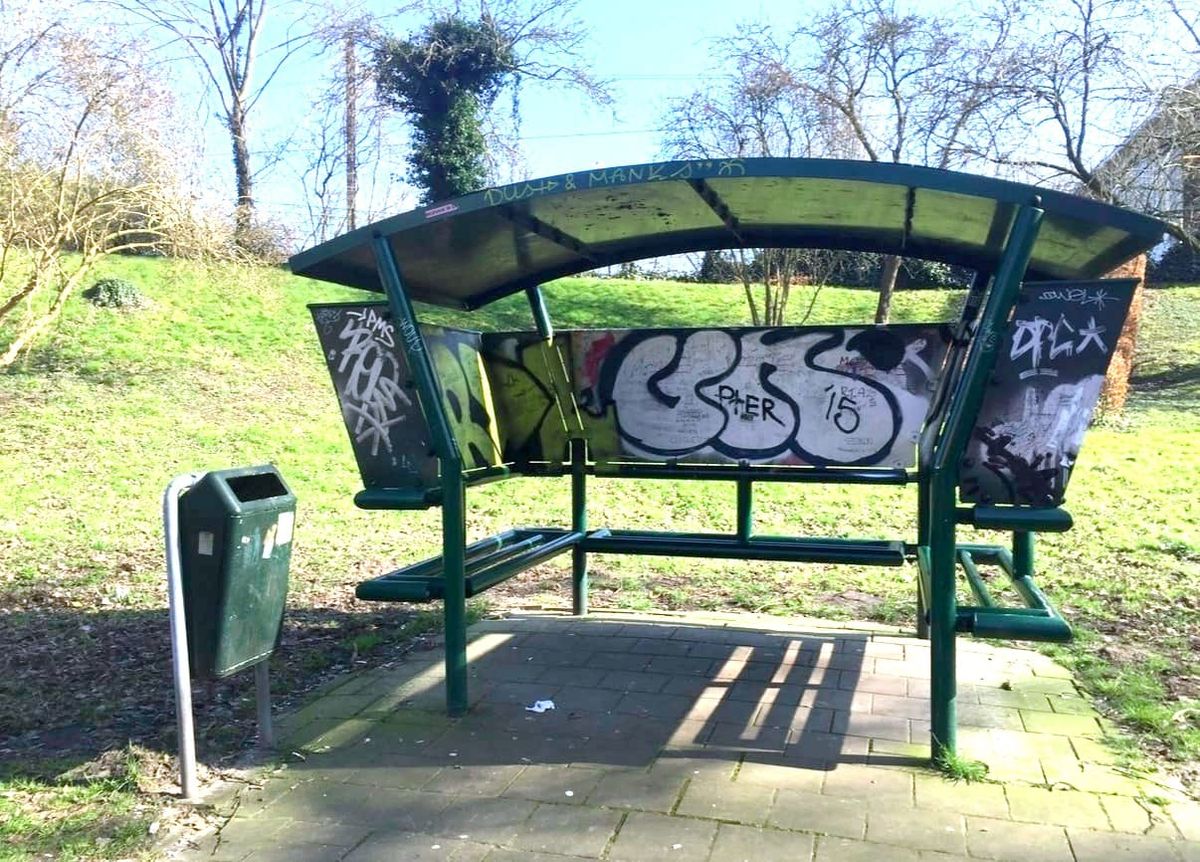
For more on designing sound civic systems, explore the Dutch hangplek